Interview with Rev. Dr. Meredith Stone
By: Anna Grace Glaize
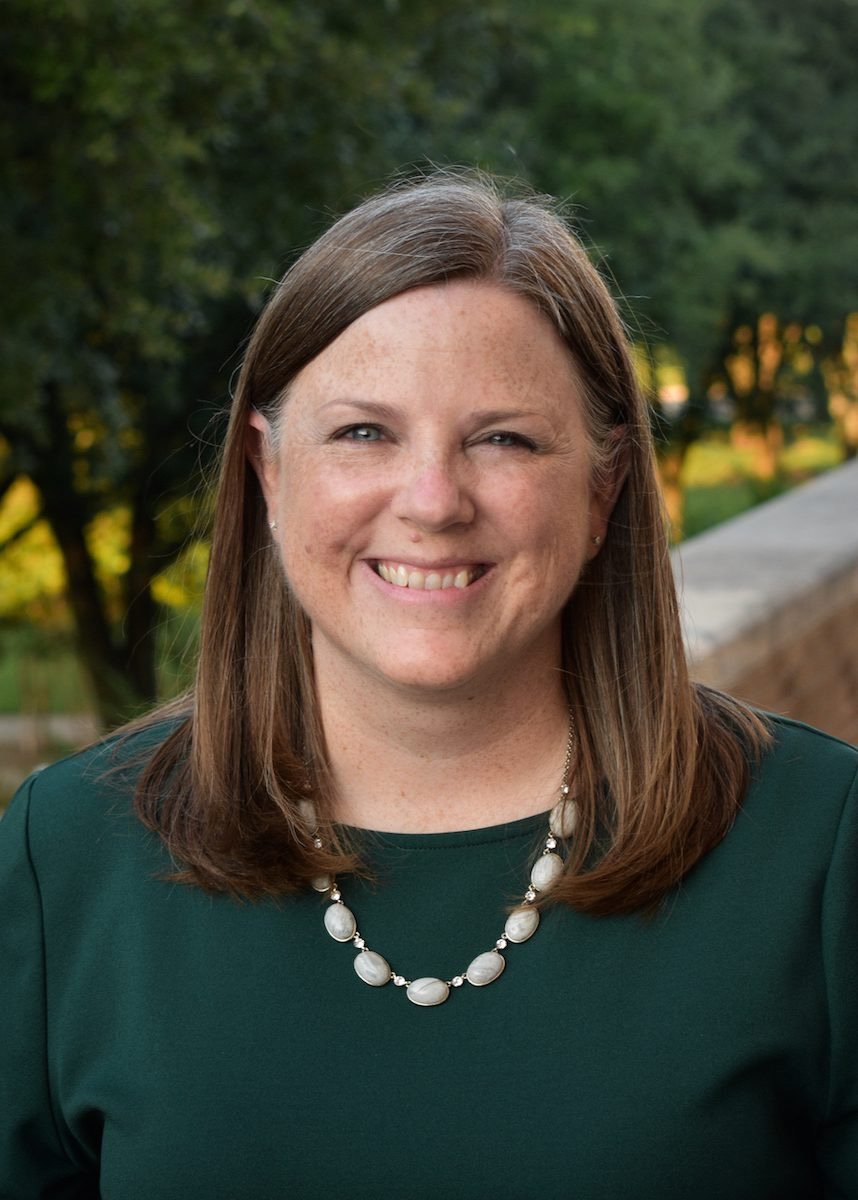
Photo courtesy of bwim.info
Rev. Dr. Meredith Stone is the Executive Director of Baptist Women in Ministry. She was kind enough to speak with us about the organization’s response to recent events in the Southern Baptist Convention, male mentors in ministry, and five women who harnessed their sisterhood to advocate for themselves. This interview was conducted on July 28, 2026, and was edited for clarity and length.
AGG: Reverend Dr. Meredith Stone, you have become a bit of an internet sensation recently because of a video of yours [watch it here]. How did that video come about?
Rev. Dr. Stone: Baptist Women in Ministry exists to support and advocate for the full affirmation of women in ministry and Baptist life. On May 18, we became aware that Al Mohler, the president of Southern Baptist Theological Seminary, had intentions of proposing a new version of a constitutional amendment for the Southern Baptist Convention, which would even further restrict women's roles in ministry in cooperating churches. He was calling it the “Truth and Unity Amendment.”
On my walk that night, I put some thoughts together and then went into the sanctuary of the church where my office is, and recorded those thoughts, literally just holding my phone in my hand. I had no idea it would be received as strongly as it was.
It got the attention of some of the more high-profile Southern Baptist leaders, including the president of the Council on Biblical Manhood and Womanhood, who reposted it to his account. Which then, of course, triggered the haters of women’s equality in the church, especially among Baptists.
That was the spark that set off the volcano. A couple of weeks following that, as we were deciding how we were going to respond to the convention meeting, we decided we didn’t feel safe doing anything in-person. Our board chair said, “What if we took our travel money and got a billboard close to the convention center?” I was like, “You’re a genius. I have no idea how to do that, but I’ll figure it out.”
So, we took out a billboard that was right between the airport and the convention center, and it just said, “God calls women to pastor, preach, and minister.” Then, like any opinion billboard, it had to say, “Paid for by Baptist Women in Ministry” at the bottom. We posted about that, and last I checked, that one post alone was at a million and a half views.
The next week, whenever the vote happened, we posted a press release, which literally didn't even have a picture! It was a picture of a press release, and it got even more views than the billboard. We had women reaching out to us who didn't know that we existed, even though we're over 40 years old.
Our Facebook and Instagram grew by 50%, but we also realized that some of those followers weren’t following us for the right reasons. They were following to find out who to go after. Hate was very high on our accounts for a few weeks, and we had to be extra diligent in hiding and blocking all of that. We have a practice of posting anytime we hear of a Baptist woman's ordination, and we had to stop for a little while, because we didn’t want to put those women at risk.
AGG: That amendment we're referring to uses the language of “truth and unity.” It struck me as funny that he chose that language when the two most famous recipients of a call for unity in the Bible are two women, Euodia and Syntyche, those co-strugglers in the work of the Lord [Philippians 4:2-3].
Rev. Dr. Stone: Yes. The language itself, I think, was manipulative.
Here's an interesting thing. Al Mohler, in the 80s, had a very different perspective. In 1984, when the Southern Baptist Convention adopted a resolution taking a stand against the ordination of women, Al Mohler signed an open letter in the Courier Journal of Louisville, Kentucky that opposed it.
He’s on the record, in print, as saying that telling churches they can't ordain women is wrong. And yet, now, the argument he's making is that the “truth” is the church historically has always been against women. It is interesting that he would call that the truth when he even disagreed with that truth.
AGG: In your response video, you bring up a passage in 1 Corinthians about prophecy and head coverings. I will admit, when I read those verses, I can be distracted by some of the cultural context and miss the forest for the trees, so to speak.
Rev. Dr. Stone: So much attention is drawn to 1 Corinthians 14, where Paul writes women should not speak. But it is remarkable that three chapters earlier, Paul literally says, when the women pray and prophesy in the assembly, they need to cover their heads. He doesn't say stop praying and prophesying in the assembly. He just says, when you do it, cover your head.
Anna Grace Glaize: Women speaking is assumed.
Rev. Dr. Stone: Women speaking is assumed, and he's giving instructions about how that should happen. This one tiny line is so often missed, and it tells us about what was actually happening in that church.
There are so many things in 1 Corinthians 11 that I don't talk about in the video, but there's a part about women’s head coverings that’s “because of the angels.” What does Paul mean by that? Nobody knows! But when you get down to the bottom of the section, it says (and this is my translation), “At the end of the day woman comes from man, and man comes from woman, and everything belongs to God.” It’s almost as if Paul wraps up the whole section by saying, “we're in this together, y'all!”
AGG: Your resource, A Baptist Reflection on the Bible & Women in Ministry and Leadership, is fantastic. It has a very concise explanation of ways that we read and interpret the Bible. After our readers check that out, what resource would you point them to next?
Rev. Dr. Stone: My background is in academia, and the things that come to my mind tend to be very academic at first. What I was trying to do in that resource was to take a lot of academic scholarship, condense it, and present it in an accessible form.
Alice Matthews’ Gender Roles and the People of God is a great one. Some of the work that can be influential in helping people process the nature of interpretation might be a good place to go. Adam Hamilton's Making Sense of the Bible is a wonderful introduction for students to think about coming at interpretation from a different angle. How we read the Bible is the whole point—figuring out the ways in which we approach it, rather than picking and choosing which things we say are universal prohibitions.
AGG: Baptist Women in Ministry has a mentor program for new ministers and women in new ministry contexts. Who have been your mentors throughout your life in ministry?
Rev. Dr. Stone: A friend of mine, Ellen Di Giosia, who is a coordinator for the Cooperative Baptist Fellowship of Texas, has done research on what makes an effective male ally. The number one thing that women expressed as effective was when men actually opened doors for them. That’s what happened for me: My youth minister, and the youth minister I served as an intern for, and then my seminary professor, Bob Ellis—all of these folks not only saw me, but they created space for me and gave me opportunities to exercise gifts I didn’t know I had.
AGG: With what’s going on in the Southern Baptist Convention right now, it seems like those opportunities for women may be waning at the worst possible time, especially given that some recent research has shown young women’s attendance in churches is now declining.
Rev. Dr. Stone: Within the context of our greater society, there has been a rollback of diversity, equity, and inclusion initiatives, which includes gender. Women's Studies programs are disappearing. Where I live in Texas, they are getting removed from universities right and left. This is a moment in which women of faith need to stand up and make themselves seen and try to influence the movement of the church. Because gravity is pulling things in a way which makes me concerned for future generations of women.
But also, the positive response that we have gotten as an organization over the last couple of months gives me some hope. We heard from people of every denomination, from people across the world, who were saying, “We stand with you.”
AGG: What keeps you in the Baptist tradition?
Rev. Dr. Stone: I feel very strongly that everyone needs to have their own agency in their choices. And that's the whole reason we do what we do. So, for those who choose to leave, we celebrate them, we bless them, we praise God that you're finding what is right for you.
But people feel compelled to stay for various reasons. There are so many women who don't have choices in this. Because of their relationships, they can't leave. Or they know if they do leave this church, they may not have another ministry opportunity to live out God’s call. Other people stay because it is part of their identity. Why should they be the ones to leave?
Some of us feel compelled to stay to be able to fight from within. Southern Baptists alone are the second largest Protestant denomination in the United States. Individual churches can still be places where people are finding Jesus. If we completely write off Southern Baptists, then we’ve completely written off millions of women and girls. My hope would be that every person would have the agency to choose, and that every person would have the agency to find a place where she is free, where she can truly know the fullness of freedom in Christ.
AGG: I asked that question with trepidation. As a child of the South who went to grad school at Yale Divinity School, I was asked all the time, “Aren’t you excited to have gotten out?” The answer was yes and no, but also, who’s gonna change it if everybody leaves?
Rev. Dr. Stone: The Southern Baptist Convention itself has in its DNA incredible, terrible, horrifying oppression, in that it was started in order to defend slavery. I think that DNA has carried forward, which is why I don’t feel the institution itself is worth fighting to save. But the people, and the churches, have an opportunity to make different choices, and they are always worth fighting for.
AGG: Finally, reverend, who’s your favorite woman of the Bible?
Rev. Dr. Stone: I did my academic research on the Book of Esther. In Esther and Vashti, we see different ways in which women can choose to exercise their agency to negotiate systems of oppression. That's where my academic work has focused: on the ways in which people who exist under domination negotiate systems of power. The arts of resistance are far more complicated than just rebelling or accommodating—there are many ways in between. So, I love a combination of both of those women.
Esther and Vashti make a powerful example, but the women I’ve preached on most are Mahlah, Noah, Hoglah, Milcah, and Tirzah, from Numbers 27. Also known as the daughters of Zelophehad [these five sisters, after the death of their father, successfully petition for the inheritance of their father’s land].
They don't just send the oldest to go and advocate for them to have the land. They are sisters in it, and they support one another. I imagine them coming arm and arm to Moses and going, “Come on, Moses, do what's right!” And then God telling Moses, “Those women are right!”
Too often as women, we are pitted in competition with one another. It's hard, when there is a limited amount of power for women in our world, for us not to feel like we're all competing. They are a great example of what sisterhood can look like and the power of that.