Wise Woman of Abel of Beth-Maacah
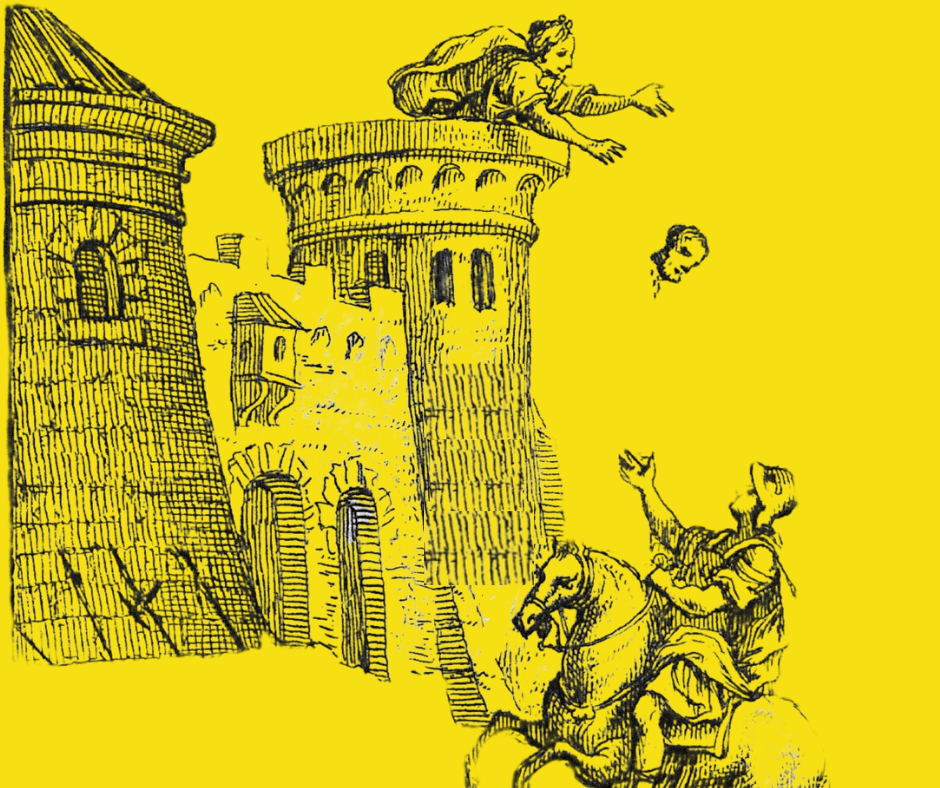
Woodcut of the narrative from 2 Samuel 20 by Christoph Weigel. Photo from Wikimedia Commons.
Even before there were kings in Israel, there were women leaders. During the time of the Exodus, Miriam led the Israelites alongside her brothers. Under Deborah’s judgeship, the land and its people prospered. After Israel shifted to monarchical governance, villages and towns still looked to their wise women for guidance. While we know very little about who these women were, two of their stories are preserved: the wise woman of Tekoa (2 Samuel 14) and the wise woman of Abel Beth-Maacah (2 Samuel 20).
When King David ruled over Israel, “a scoundrel named Sheba” rebelled (2 Sam 20:2). Sheba and his forces gathered inside the fortified city of Abel Beth-Maacah.
David’s commander, Joab, laid siege to the city to try to draw Sheba out.
During this time of crisis, as Joab’s forces battered the city’s walls, a woman stepped up. Her name is not given; she’s only called a “wise woman” (2 Sam 20:16). Whoever she is, whatever her name, she was trusted enough to speak on the city’s behalf: “They used to say in the old days, ‘Let them inquire at Abel’; and so they would settle a matter. I am one of those who are peaceable and faithful in Israel; you seek to destroy a city that is a mother in Israel; why will you swallow up the heritage of the Lord?”(2 Sam 20:18-19).
Joab is moved by the woman’s words. He tells her, “Far be it from me, far be it, that I should swallow up or destroy!” (2 Sam 20:20). Then the wise woman and Joab come to an agreement. If the city gives up Sheba, the city will be spared. The wise woman advises the people of the city, and they take her advice. They execute Sheba, and the wise woman herself throws Sheba’s head over the great city’s walls.
Apparently, the city of Abel gives up Sheba alone. His followers were also in Abel, and, presumably, some of his followers were even from Abel. But only Sheba comes to harm. Because of the leadership of their wise woman, the people of Abel Beth-Maacah—rebels or not—are saved.
List of Reading & Resources: