Abigail (Wife of David)
1 Samuel 25; 27:3; 30: 3,5,18; 2 Samuel 2:2; 3:3; 1 Chronicles 3:1
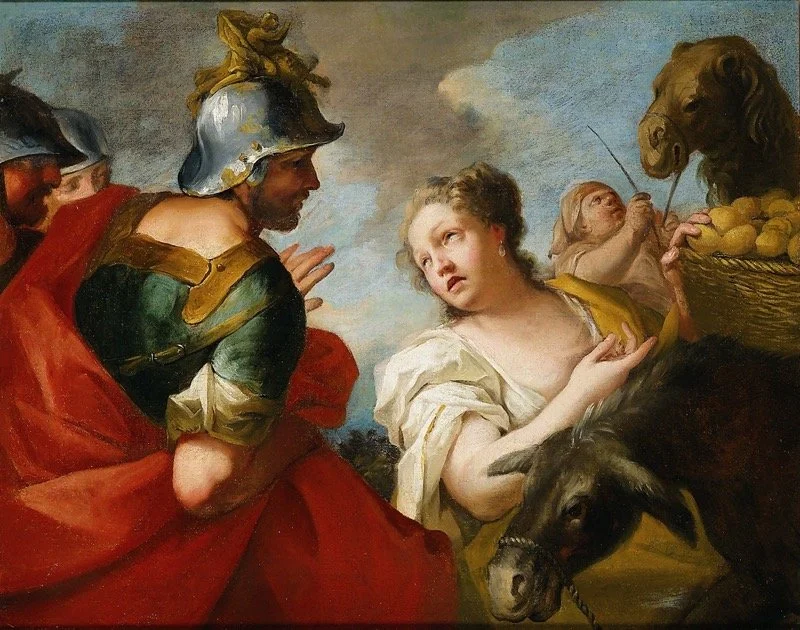
“David and Abigail” by Antonio Molinari, circa 1655, from Art in the Christian Tradition, a project of the Vanderbilt Divinity Library.
Abigail, one of the wives of David, used her wits to save her entire household. Like many other women in the Bible, she exhibits agency in her own narrative while shaping the stories of the men around her.
We first meet Abigail when she’s married to a cruel man named Nabal. David and his men, while on the run from King Saul, had kept Nabal’s sheep safe in the desert. But when David requests food and supplies from Nabal, he refuses to help them. This so infuriates David that he sets out to destroy Nabal and his household.
Abigail hears from her servants about Nabal’s actions and takes matters into her own hands. Without telling Nabal, Abigail goes out to meet David with food and supplies. She apologizes for her husband's actions and predicts that David will become the king of Israel. She asks David to spare her household so that when he does become king, “my lord will not have on his conscience the staggering burden of needless bloodshed” (1 Sam 25:31).
David grants Abigail’s request. Abigail returns home that night to find her husband drunk. The next morning, when he’s sober, she tells Nabal what she’s done: “His heart failed him and he became like a stone. About ten days later, the Lord struck Nabal and he died” (1 Sam 25: 37-38). When David hears of Nabal’s death, he asks Abigail to marry him. She agrees, joining what will become a royal household.
Abigail’s name means “my father’s joy.” The name of her first husband, Nabal, means “fool” or “boor.”
In the Talmud, Abigail is one of the seven women prophets because she correctly predicts David’s kingship.
Abigail and another of David’s wives, Ahinoam, are later taken captive by the Amalekites. Fortunately, they’re both rescued (1 Samuel 30).
List of Reading & Resources:
Articles
Books